A boat that is also a company
Buying a Yacht for a Charter Business in Southeast Asia
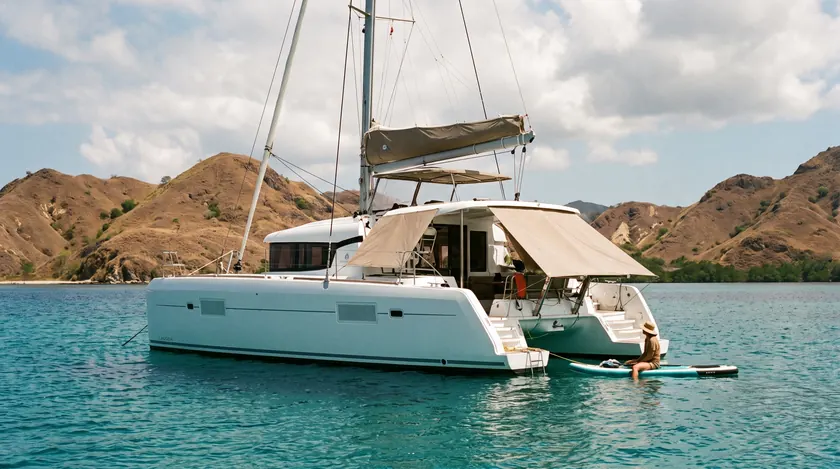
There are two completely different reasons to buy a yacht in this region, and they lead to different boats. One buyer wants a yacht and would like charter income to soften the costs; our guide on putting a yacht in charter is written for them. The other buyer is starting a business that happens to float: the boat is a revenue asset first, chosen the way you would choose a machine.
This guide is for the second buyer. It covers whether charter in Thailand and Indonesia actually makes money, the day-charter versus overnight split, which boats earn their keep in Phuket and Bali, the licensing reality in both countries, and how to buy the asset without inheriting someone else's deferred maintenance.
Is a yacht charter business profitable in Thailand or Indonesia?
It can be, and plenty of them quietly are, but the honest answer starts with the shape of the business rather than a promised percentage. Revenue in this region is seasonal and utilisation-driven: Phuket's high season runs roughly November to April, Bali's peak follows the dry months and holiday calendars, and a boat that books solidly through the peaks must also survive the shoulder months and an annual yard period. Anyone quoting you a guaranteed yield on a charter yacht is selling the boat, not the truth.
What separates the operators who last from those who sell up after two seasons is rarely the boat. It is distribution, meaning direct bookings and agent relationships rather than dependence on one platform; cost discipline, because crew, fuel, moorage and commissions eat gross revenue line by line; and maintenance done on schedule in a climate that punishes neglect. Treat the purchase as buying plant for a hospitality business with real operating leverage, model the low season honestly, and the good versions of this business clear their costs with room to spare.
Day charter or overnight charter: two different businesses
Decide this before looking at a single listing, because the two models share almost nothing but water.
Day charter is a turnover business: one boat, sometimes two trips a day in peak, guests who book online days in advance, snorkel stops and a sunset. The asset works hard, crew go home at night, and revenue scales with trips completed. It suits Phuket's island circuit and Bali's day-trip market, and it is the easier business to learn, staff and exit.
Overnight charter sells itineraries rather than hours: multi-day trips through the Similans or, in Indonesia, the Komodo liveaboard trade where a crewed phinisi sells cabin nights or whole-boat expeditions at a premium per night. Tickets are larger, margins can be richer, but so are crew payroll, provisioning logistics and the cost of an empty week. Our advice to first-time operators is consistent: a day boat teaches the market cheaply, and the overnight trade rewards operators who already understand it.
Which boat earns in a day charter business in Phuket or Bali?
The day-charter fleet in this region has converged on a few proven shapes, and the convergence is information.
The sailing catamaran is the regional default for good reason: a Lagoon 42 or similar carries a large licensed group in shade and stability, serves lunch at anchor without anyone turning green, and shrugs off the thousand swim-ladder cycles a season brings. Powercats and stable motor platforms trade sail romance for schedule reliability, covering more stops per day, which is revenue. At the premium end, a fast dayboat like an Axopar 37 sells small-group speed to private villas and resorts rather than volume tourism.
Whatever the platform, the commercial checklist is the same: passenger capacity as licensed, not as brochured; shade and seating for the full complement; engine access a mechanic can live with; and a layout crew can clean in the hour between trips. Buy the boat the business plan needs. The current regional stock is on our Thailand and Indonesia sale pages.
What are realistic yacht charter investment returns in Asia?
We will not print a percentage and call it typical, because the honest range is wide and the inputs are yours: purchase price, utilisation, rate discipline and how much of the operation you run versus outsource. What we can give you is the structure of the maths, which is where most projections go wrong.
Gross revenue is trips multiplied by realised rate, and realised rate sits below the rate card once agent and platform commissions come off, commonly a meaningful double-digit percentage of each booking in this market. From gross, subtract crew wages and their seasonality, fuel per trip profile, moorage and park or anchorage fees, insurance written for commercial use, marketing, and a maintenance reserve that respects the tropics, with haul-outs and the gelcoat and systems wear our tropical survey guide catalogues. What remains must service any finance and still reward the capital and the risk.
Run that model on pessimistic utilisation before buying. We help serious buyers pressure-test the sheet against what comparable operations actually achieve, which is a conversation rather than a brochure number.
Have a business plan half-built already? Send the base, the boat type and the budget, and we will tell you what the local market will and will not support.
Discuss a charter business on WhatsAppLicences and company setup: Thailand vs Indonesia
Both countries host thriving charter fleets, and both regulate who may carry paying passengers, so the corporate and licensing layer is part of the purchase decision, not an afterthought.
In Thailand, commercial passenger operation brings Thai registration, survey and crewing requirements, and the rules around foreign-owned boats chartering have been actively reformed in recent years, which cuts both ways: openings exist, and details change. In Indonesia, commercial operation points toward an Indonesian-flagged vessel run through a locally established company, the structure most foreign operators in Bali and Labuan Bajo use, while foreign-flagged private visits sail under a different regime entirely, as our charter placement guide explains alongside the cabotage background.
We say this plainly: get the structure designed by a maritime lawyer in the country of operation before money moves, and have the licensing path confirmed in writing. The desk's Thailand import guide covers the duty and VAT side, and we work alongside the professionals who handle the rest. Rules here genuinely move; verify the current position.
Buying the asset: new, used or ex-charter
Three sourcing routes, three different risk profiles.
New means warranty, specification control and immediate booking-photo appeal, at the price of capital outlay and delivery lead times that can eat a season. Used private boats often come lightly used but configured for couples rather than commerce, so budget the refit that adds capacity, shade and durability. Ex-charter boats are pre-configured for exactly this work and priced accordingly, but they have lived a hard life in warm water: the difference between a bargain and a liability is the survey, and our tropical survey checklist is the minimum standard we would apply, with engines, sail-drives, rigging and osmosis checked by people who answer to you alone.
One more commercial habit worth adopting: buy with the handover season in mind. A boat surveyed and refitted in the low season starts earning on day one of the peak, while a peak-season purchase pays high-season prices to sit in a yard. Tell us the operating base and the launch date, and we will source backwards from them.
Frequently asked questions
How many charter days a year does a day boat need to break even?
It depends on the rate, the cost base and the finance, which is why we distrust universal answers. The discipline that matters: build the break-even in trips per month, test it against the real seasonal booking curve of your base, and make sure the low-season months are survivable on the trips they actually deliver, not the trips the average implies. We help buyers sanity-check that curve against comparable operations before they commit.
Can a foreigner own a yacht charter business in Indonesia?
Foreign investors operate charter businesses in Indonesia, typically through a locally established investment company and Indonesian-flagged vessels, and the Komodo liveaboard fleet includes plenty of foreign-backed operations. The structure has real requirements on capital, licensing and crewing, and the rules evolve, so treat a maritime and corporate lawyer in Indonesia as a startup cost, not a luxury.
Is Phuket or Bali the better base for a new charter operator?
Phuket offers deeper marine infrastructure, a larger used-boat market and an established day and overnight circuit, which makes it the gentler place to learn. Bali offers strong demand and premium positioning but thinner yard facilities, and its best trade for bigger ambitions is the Komodo route operated out of Labuan Bajo. Many operators start in Phuket for the infrastructure and expand toward Indonesia once the model proves itself.
Should I buy the boat first or set up the company and licence first?
Structure first, boat second, ideally negotiated in parallel. The company, flag and licensing path determine what the boat must be, including capacity, survey class and registration, and a boat bought before the structure exists can sit idle for months while paperwork catches up, burning moorage in silence. We time purchases so the survey, refit and licensing converge on the same launch window.
Pressure-test the plan before you buy the boat
Tell us the base, the model you have in mind and the capital you want to commit. We reply with what comparable boats cost, what the local trade supports, and where we would buy.
Discuss a charter business on WhatsApp