Duty, VAT and the 2025 to 2026 reform
Importing a Yacht Into Thailand: Duty, VAT and the Charter License Rules
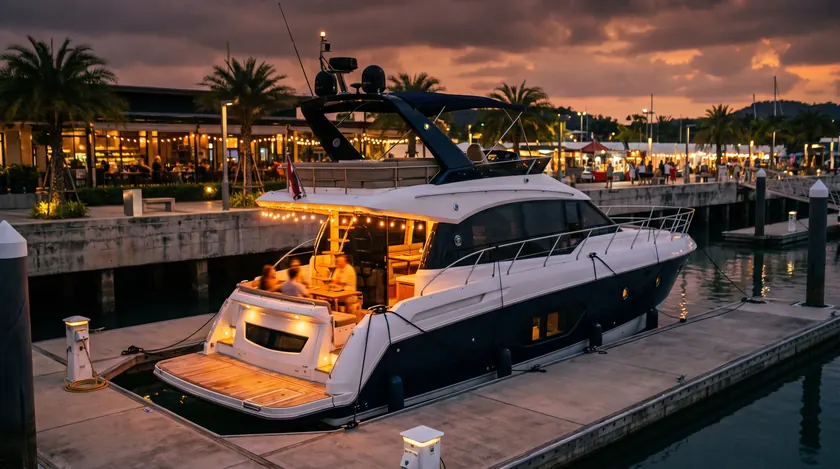
Every import conversation starts the same way and ends differently depending on one fact: is this yacht going to sit privately at a berth, or is it going into charter. Thailand's duty, VAT and excise treatment now diverges sharply between those two answers, more sharply than it did even a year ago.
This guide walks through what Thai customs and the Marine Department actually ask for, what the 2025 Thai Charter License reform changed, and what remains genuinely unconfirmed and worth a direct call to a customs broker before you sign anything. We work from the Marine Department's own registration categories and the reform as reported by the Thai Yachting Business Association, not forum rumor.
What is the current import duty on yachts in Thailand?
Historically, customs duty on an imported pleasure yacht in Thailand could run as high as 35 percent of value, a figure alone enough to push serious buyers toward Langkawi or Singapore instead. That duty is now widely reported as exempt for pleasure yachts. Excise tax follows the same pattern: it can run up to 50 percent of value on vessels in general, but pleasure yachts and similar recreational craft are now reported exempt from that band too.
We use the word reported deliberately. This shifted recently, as part of the same 2025 to 2026 push that lowered the charter license threshold, and the exact current HS-code treatment should be verified directly with a Thai customs broker before you commit to an import, not assumed from a guide, ours included.
Do I still pay VAT if I get a Thai Charter License?
Standard VAT in Thailand is 7 percent, charged on the yacht's declared value for an ordinary private import. That has not changed. What changes under the 2025 reform is the base VAT is calculated against, if you hold a Thai Charter License.
The practical effect is that a charter owner pays tax on what the boat earns, not on what the boat is worth. On a seven figure yacht that is a very different bill, but it only applies once you are inside the charter license framework, and it does not retroactively apply to a boat you plan to keep entirely private. For the private-ownership running-cost side of this same question, see our cost of ownership guide.
| Cost item | Private, non-commercial import | Thai Charter License route |
|---|---|---|
| Customs duty | Historically up to 35%, now widely reported exempt for pleasure yachts, confirm with a customs broker | Same exemption reported, confirm with a customs broker |
| Excise tax | Up to 50% on vessels generally, pleasure yachts now reported exempt | Same exemption reported |
| VAT | 7% standard rate on the full declared yacht value | 7% VAT plus 5% corporate income tax, calculated only on charter fee revenue earned in Thailand |
| Vessel size threshold | No minimum, any private pleasure yacht | 24m and above, lowered from 30m in 2025 |
| Passenger limit | Not applicable | Up to 12 passengers |
| Licence validity | Not applicable | 1 year, confirm renewal terms with the Marine Department |
What is the minimum yacht size for the Thai Charter License?
24 metres, lowered from an earlier 30 metre threshold specifically to widen the domestic charter fleet. The license runs under a 2025 Ministry of Transport framework, formalized as a Royal Decree, B.E. 2568, and sits alongside the Marine Department's standard registration categories rather than replacing them. A yacht under 24 metres can still register and cruise privately, it simply cannot take the commercial charter license at that size, and standard registration confines private, non-commercial use to roughly 15 nautical miles of shore in any case.
Do I need to change my yacht's flag to charter in Thailand?
No, and this is the headline change. Before the 2025 reform, a foreign-flagged yacht simply could not charter for hire in Thai waters at all unless it was re-flagged Thai outright, a step many owners were reluctant to take. The new Thai Charter License lets a foreign-flagged yacht of 24 metres or above carry paying charter guests, up to 12 of them, for a one year license period, without re-flagging. We set out how this plays out in practice, including how it compares with Indonesia's very different approach, in our charter guide for Bali and Phuket.
Prefer to just ask? Send a short message, we reply the same day.
Ask a questionHow long does yacht registration take with the Marine Department?
This research did not turn up a single confirmed processing timeline, and we are not going to invent one. What we can tell you is the shape of the requirement: registration runs through the Marine Department, Ministry of Transport, and a foreign national registers in their own name with proof of a Thai address, while a foreign company cannot register a boat at all. Ask the Marine Department office you are filing with for its current processing time before you plan a handover date around it.
What documents are required to import a used yacht into Thailand?
The paperwork stack for a used import is fairly standard, though a customs broker will confirm the exact set for your specific vessel and its country of origin. A Fountaine Pajot Elba 45 bought new through The Yacht Sales Co's Thai dealership skips several of these steps since it is sold, and often registered, locally from the outset.
- Bill of sale showing clear title and chain of ownership
- Builder's certificate or equivalent proof of origin
- Current registration or deletion certificate from the previous flag state
- Insurance certificate valid for Thai waters
- Customs declaration with HS classification agreed in advance with your broker
- Proof of a Thai address for the registering owner
Getting an exact number before you commit
Every duty, VAT and excise figure here reflects a rule that is either published or reported as changed very recently, not a quote for your specific hull, its year of build or its country of origin. A Thai customs broker can turn all of it into one landed-cost number, and the Marine Department can confirm current processing times for your registration category.
If you already have a boat and a route in mind, tell us the model, where it is now and whether you plan to charter it, and we will help you build the number before you sign anything. Buyers still deciding between markets often ask us to run the same comparison against Malaysia's duty-free Langkawi registry, which solves a similar problem in a genuinely different way. If Phuket is your base, current Thailand listings are the next stop once the import math checks out.
Frequently asked questions
What is the current import duty on yachts in Thailand?
Customs duty, historically as high as 35 percent of value, is now widely reported as exempt for pleasure yachts, and excise tax, up to 50 percent on vessels generally, is likewise now reported exempt for this category. Both changes are recent enough that you should confirm the exact HS-code treatment with a Thai customs broker before relying on them for a purchase decision.
Do I still pay VAT if I get a Thai Charter License?
Yes, but on a different base. A qualifying Thai Charter License holder pays 7 percent VAT plus 5 percent corporate income tax only on charter fee revenue earned in Thailand, rather than 7 percent VAT on the full declared yacht value that applies to an ordinary private import.
What is the minimum yacht size for the Thai Charter License?
24 metres, lowered from an earlier 30 metre threshold under the 2025 to 2026 reform aimed at growing Thailand's domestic charter fleet. The license carries up to 12 passengers and runs under a 2025 Ministry of Transport framework, Royal Decree B.E. 2568.
Do I need to change my yacht's flag to charter in Thailand?
No. Before 2025, a foreign-flagged yacht could not legally charter for hire in Thai waters without re-flagging Thai. The new Thai Charter License lets a foreign-flagged yacht of 24 metres or above take paying charter guests for a one year license period without re-flagging.
What documents are required to import a used yacht into Thailand?
Expect to provide a bill of sale, builder's certificate or proof of origin, the current registration or deletion certificate from the previous flag state, an insurance certificate valid for Thai waters, an agreed customs HS classification, and proof of a Thai address for the registering owner. A customs broker will confirm the exact set for your vessel's origin.
Have a specific boat and route in mind
Tell us the model, its current flag and whether you plan to charter it, and we will build the landed cost and registration stack before you sign anything.
Ask a question