Ownership costs, Thailand
What It Really Costs to Own a Yacht in Thailand
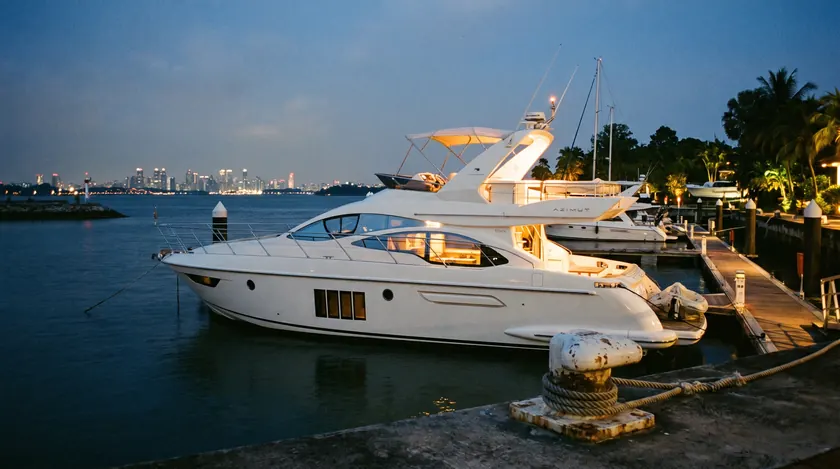
We get asked this before almost every purchase, not which boat, but what it will actually cost to keep it here. The sale price is the number a buyer arrives with. Marina fees, haul-out, VAT exposure and the new charter license math are the numbers that decide whether the boat still makes sense two years in.
This guide sets out the real cost stack for owning a yacht in Thailand in 2026: what the Marine Department requires to register it, what the Phuket and Pattaya marinas actually offer, and how the 2025 to 2026 Thai Charter License reform changes the VAT bill for owners who charter. Where a figure is not publicly confirmed, we say so and name who to call before you rely on it.
Which authority regulates yacht registration in Thailand?
Thailand's Marine Department, under the Ministry of Transport, handles standard yacht registration. There is no nationality-prefix system attached to the certificate: a foreign national can register a yacht 100 percent in their own name provided they can show a Thai address. A foreign company cannot register a boat in Thailand, a distinction that trips up buyers who assumed they could simply hold the vessel through an offshore corporate structure the way they might elsewhere in the region.
Standard registration falls under the Sports and Recreation category, restricted to private, non-commercial use within roughly 15 nautical miles of shore. That single line is the whole reason the 2025 Thai Charter License reform exists: without it, a foreign-flagged yacht could not legally charter for hire in Thai waters at all unless it was re-flagged Thai outright. We cover the license itself further down, and in full detail in our Bali and Phuket charter guide.
Can a foreigner own a yacht registered in Thailand?
Yes, in your own name rather than through a Thai company. The one document the Marine Department will ask for is proof of a Thai address, and a broker who has done this paperwork before will know which address types a given registration office accepts, since this varies office to office.
What are typical marina fees at Phuket Boat Lagoon or Royal Phuket Marina?
Neither Phuket Boat Lagoon nor Royal Phuket Marina, nor any of the other Phuket and Pattaya marinas we track, publishes a public berth-fee rate card, so treat any number you hear secondhand as a starting point for a phone call, not a budget line. What we can tell you with confidence is the shape of the market: which marinas exist, how big they are, and what kind of boat each one is actually built for.
| Marina | Location | Capacity | Note |
|---|---|---|---|
| Royal Phuket Marina | Koh Kaew, Phuket | 350 berths up to 35m, about 100 wet berths plus hardstand and dry stack | 20 minutes from Phuket International Airport, next to Phuket Boat Lagoon |
| Phuket Boat Lagoon | Phuket | 173 wet berths plus hardstand for about 135 more | Home to Precision Shipwright Services, refit and repair since 1997 |
| Ao Po Grand Marina | Ao Po, Phuket | 300 in-water plus 100 on land | 24 hour, zero tide restriction access, closest marina to Phang Nga Bay |
| Phuket Yacht Haven | Phuket | 300 in-water berths | One of Phuket's two 24 hour access marinas, up to about 55m |
| Ocean Marina Yacht Club | Jomtien, near Pattaya | Roughly 380 to 450 wet berths, 40 hardstand, 200 dry storage | Billed as the largest marina in Southeast Asia, sailing school and charter fleet on site |
What are typical annual running costs for a motor yacht in Thailand?
The rule of thumb we use to sanity-check any yacht budget is that annual running costs sit around 10 percent of the boat's purchase value: berth or mooring, insurance, haul-out and antifouling, crew if the boat is crewed, and routine maintenance. It is a rule of thumb, not a quote, but it scales in a useful way across very different boats, which is exactly why we lean on it as a first estimate before a broker or manager builds a line-by-line number.
| Model | 2026 price range (USD) | Est. annual running cost |
|---|---|---|
| Fountaine Pajot Elba 45 | $320,000 to $650,000 | $32,000 to $65,000 |
| Lagoon 42 | $375,000 to $620,000 | $37,500 to $62,000 |
| Azimut 55 | $350,000 to $1,550,000 | $35,000 to $155,000 |
| Monte Carlo 6 | $700,000 to $1,900,000 | $70,000 to $190,000 |
| Princess F55 | $900,000 to $1,700,000 | $90,000 to $170,000 |
Why the range inside one model is so wide
An Azimut 55 can cost anywhere from $35,000 to $155,000 a year to run, and hull generation, engine hours and charter-fleet history move that number more than the badge on the transom does. A Fountaine Pajot Elba 45, sold through The Yacht Sales Co's Phuket Boat Lagoon, Yacht Haven and Ocean Marina Jomtien sales centres, sits toward the lower end of this table, and a sailing catamaran generally costs less to run than a motor yacht of similar length given lower fuel burn alone.
Prefer to just ask? Send a short message, we reply the same day.
Ask a questionHow much VAT do I pay on a yacht in Thailand?
Standard VAT in Thailand is 7 percent, applied to the yacht's declared value on ordinary import. Customs duty on imported pleasure yachts, historically as high as 35 percent, is now widely reported as exempt for this category, and excise tax, which can run up to 50 percent of value on vessels generally, is likewise now reported exempt for pleasure yachts. Confirm the exact current HS-code treatment and any residual duty with a Thai customs broker: this changed recently enough that we would not want a client relying on our summary alone for a live transaction. We go through the full duty and VAT stack, including the paperwork, in our Thailand import guide.
The number that actually moves under the 2025 to 2026 reform is what a charter owner pays. A foreign-flagged superyacht taking the Thai Charter License can secure its commercial operating license without paying that 7 percent VAT on the full yacht value, instead paying 7 percent VAT plus 5 percent corporate income tax only on the charter fee revenue earned in Thailand. That is a materially different bill on a seven figure yacht, and it only applies once the boat sits inside the charter license, not to private, non-commercial ownership.
Do I need a Thai Charter License to rent out my yacht?
Yes, unless you re-flag the vessel Thai outright, since a foreign-flagged yacht otherwise cannot legally charter for hire in Thai waters. The license itself, introduced under a 2025 Ministry of Transport framework, Royal Decree B.E. 2568, is open to foreign-flagged yachts of 24 metres and above, lowered from an earlier 30 metre threshold specifically to grow the domestic charter fleet, carrying up to 12 passengers, and valid for one year. A March 2025 HBO series featuring a Phuket-based charter yacht reportedly drove a spike in charter inquiries within days of release, a reminder of how exposure-sensitive this market is even before the tax treatment enters the picture. We compare the qualifying details against Indonesia's very different rules in our charter guide for Bali and Phuket.
Building your own number
Every figure in this guide is a published rule, a rate or a range, not a quote for your specific boat. A Thai customs broker can turn the duty and VAT rules into an exact landed cost if you are importing, and a marina can quote current berth availability and pricing against your boat's actual length and beam, information none of them publish generally. Owners comparing jurisdictions sometimes ask us how Malaysia's Langkawi registry stacks up on tax. It is a fair question: Langkawi's duty-free status covers different ground than Thailand's charter-license carve-out, and we set out exactly where in our Langkawi guide.
If you already own, or are close to buying, a yacht in Thailand and want the real number built line by line, including whether the charter license changes your answer, tell us the model and where you plan to keep it.
Frequently asked questions
How much VAT do I pay on a yacht in Thailand?
Standard VAT is 7 percent of the yacht's declared value on an ordinary import. Under the 2025 to 2026 Thai Charter License reform, a qualifying foreign-flagged yacht instead pays 7 percent VAT plus 5 percent corporate income tax only on charter fee revenue earned in Thailand, not on the full yacht value. Confirm the current HS-code treatment with a Thai customs broker before you rely on either figure for a live transaction.
What are typical marina fees at Phuket Boat Lagoon or Royal Phuket Marina?
Neither marina publishes a public berth-fee rate card. Royal Phuket Marina holds about 350 berths up to 35 metres and Phuket Boat Lagoon around 173 wet berths plus hardstand for roughly 135 more, but pricing depends on your boat's length, beam and whether you want wet or dry storage. Confirm current rates directly with each marina.
Do I need a Thai Charter License to rent out my yacht?
Yes, unless the vessel is re-flagged Thai outright. The Thai Charter License, introduced in 2025, opened commercial chartering to foreign-flagged yachts of 24 metres and above, down from an earlier 30 metre threshold, carrying up to 12 passengers for a one year license period.
What are typical annual running costs for a motor yacht in Thailand?
We use an industry rule of thumb of roughly 10 percent of the boat's purchase value a year, covering berth, insurance, haul-out and maintenance. On an Azimut 55 priced $350,000 to $1,550,000, that works out to roughly $35,000 to $155,000 a year, though charter-fleet history and engine hours move the real number more than the model name does.
Can a foreigner own a yacht registered in Thailand?
Yes. A foreign national can register a yacht 100 percent in their own name with Thailand's Marine Department, provided they can show a Thai address. A foreign company, however, cannot register a boat in Thailand directly.
Want a real running cost number for your boat
Tell us the model and where you plan to keep it, and we will walk the marina, VAT and charter license math through before you commit.
Ask a question